Huntington Beach was built quickly. Its population went from 11,492 in 1960 to 170,505 in 1980 (U.S. census counts), and the Census Bureau puts the median year built of local housing at 1974. Of about 82,600 homes, 32.7 percent were built in the 1960s and 30.1 percent in the 1970s (ACS 2024 5-year). Construction on Huntington Harbour started in 1963 across five man-made islands: Admiralty, Davenport, Gilbert, Humboldt and Trinidad. Newer developments such as Brightwater on the Bolsa Chica mesa are the exception.
The mix of buildings matters as much as their age. Detached houses make up 46.6 percent of the city's housing. Another 12.4 percent are attached single-family homes, 37.6 percent are in buildings of two or more units, and 3.5 percent are mobile homes (ACS 2024 5-year). That means we work on private attached garages on tract streets and on shared or row garages in townhome and apartment complexes. Door sizes and styles vary within a single neighborhood, so we measure every opening on the visit instead of assuming a size.
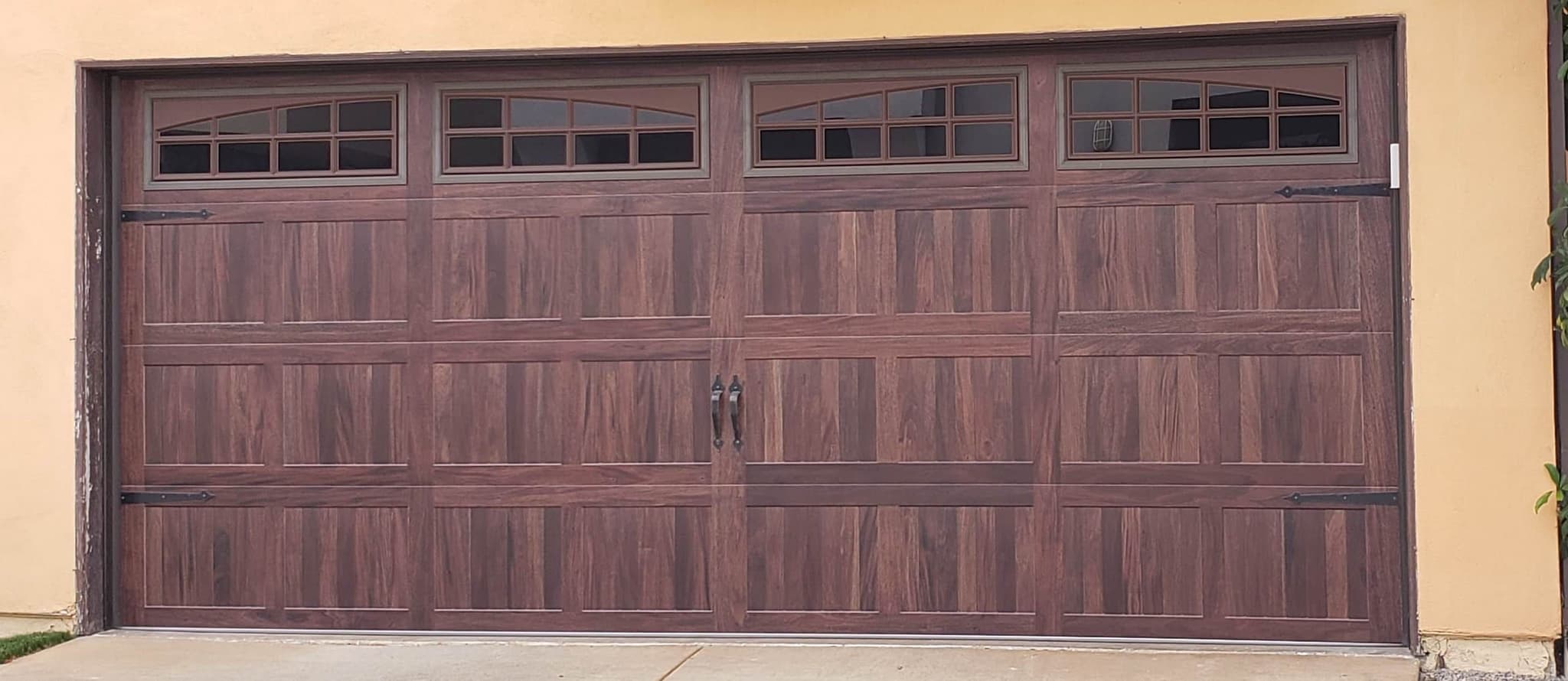
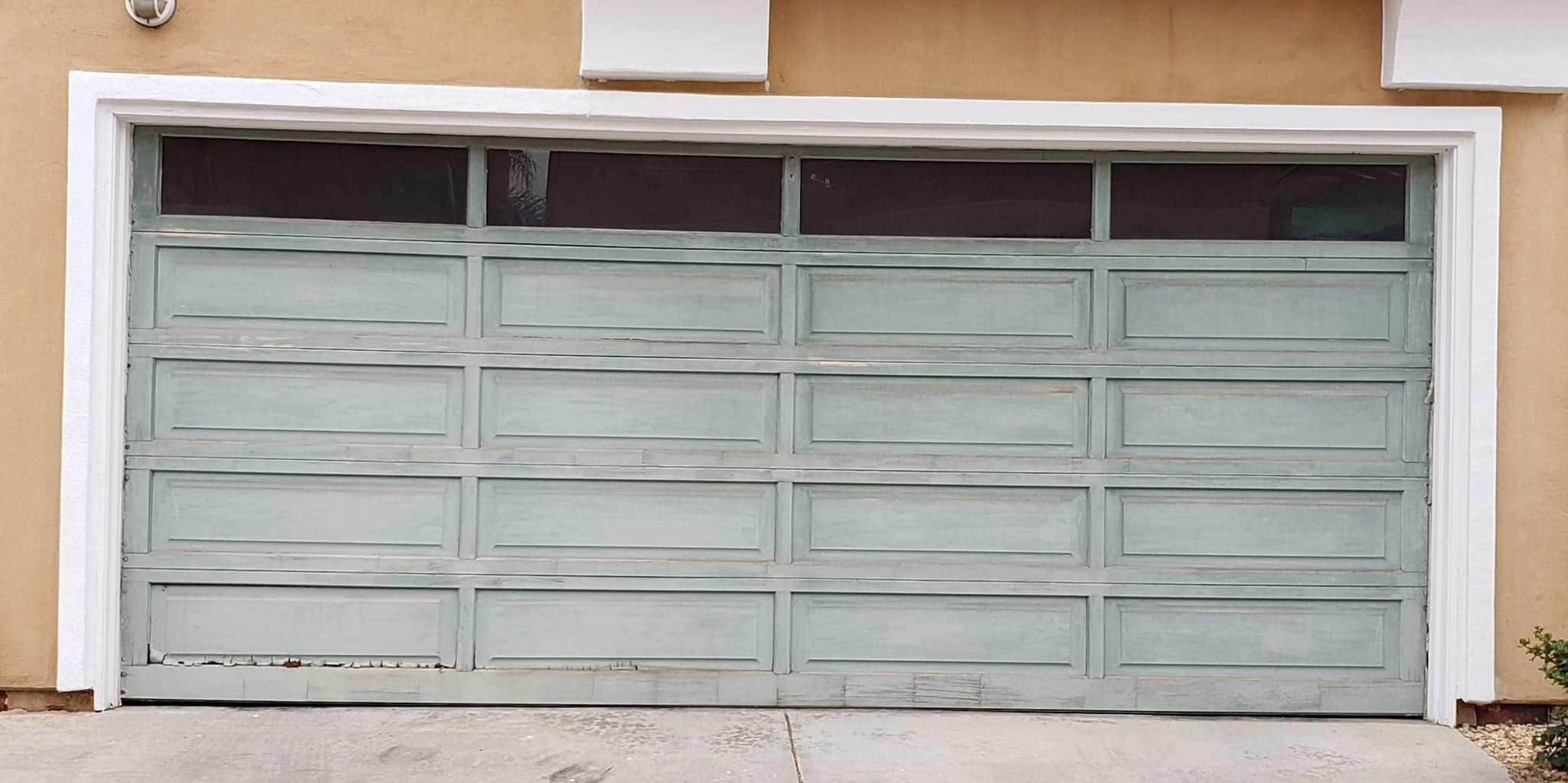
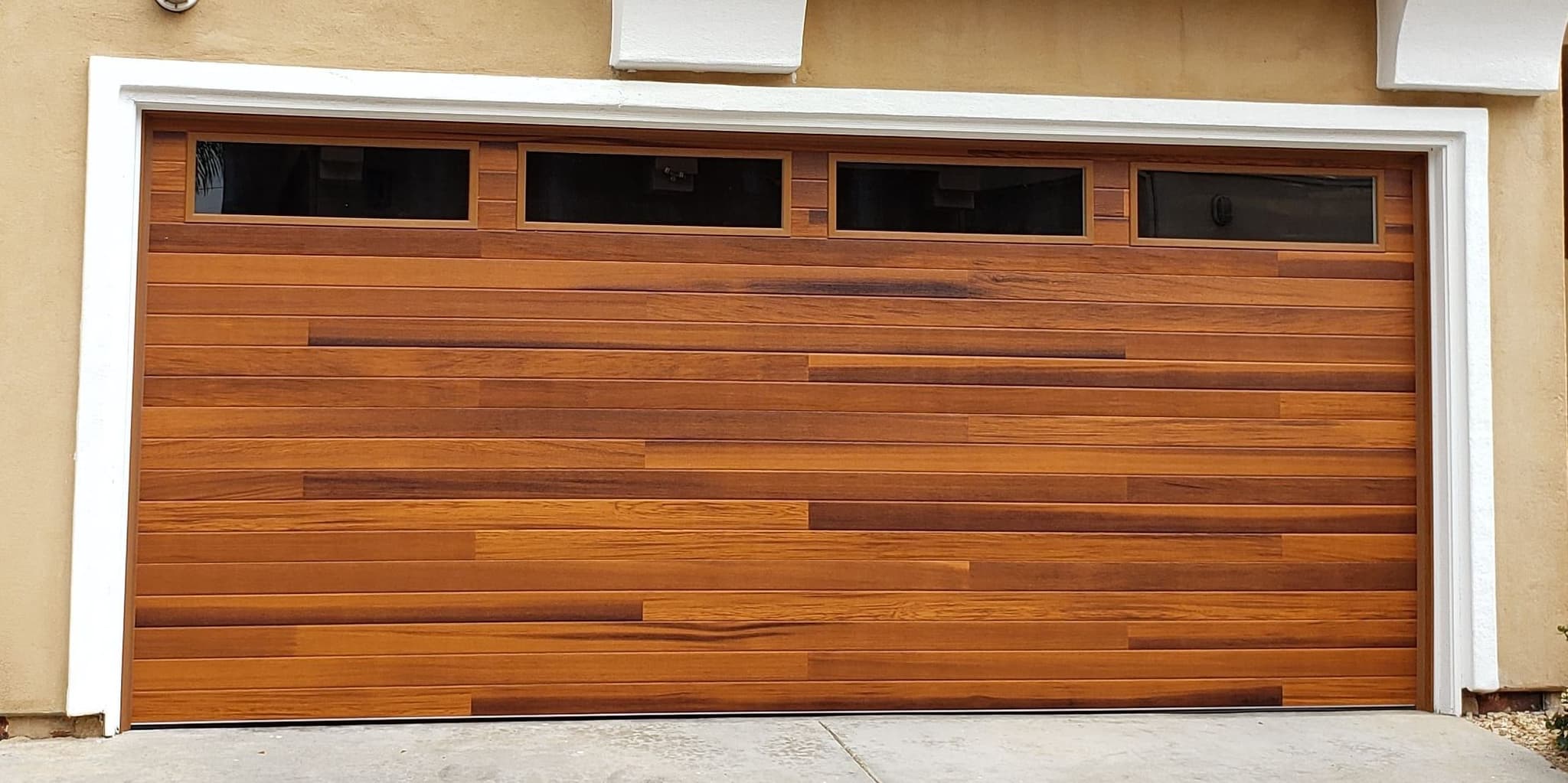
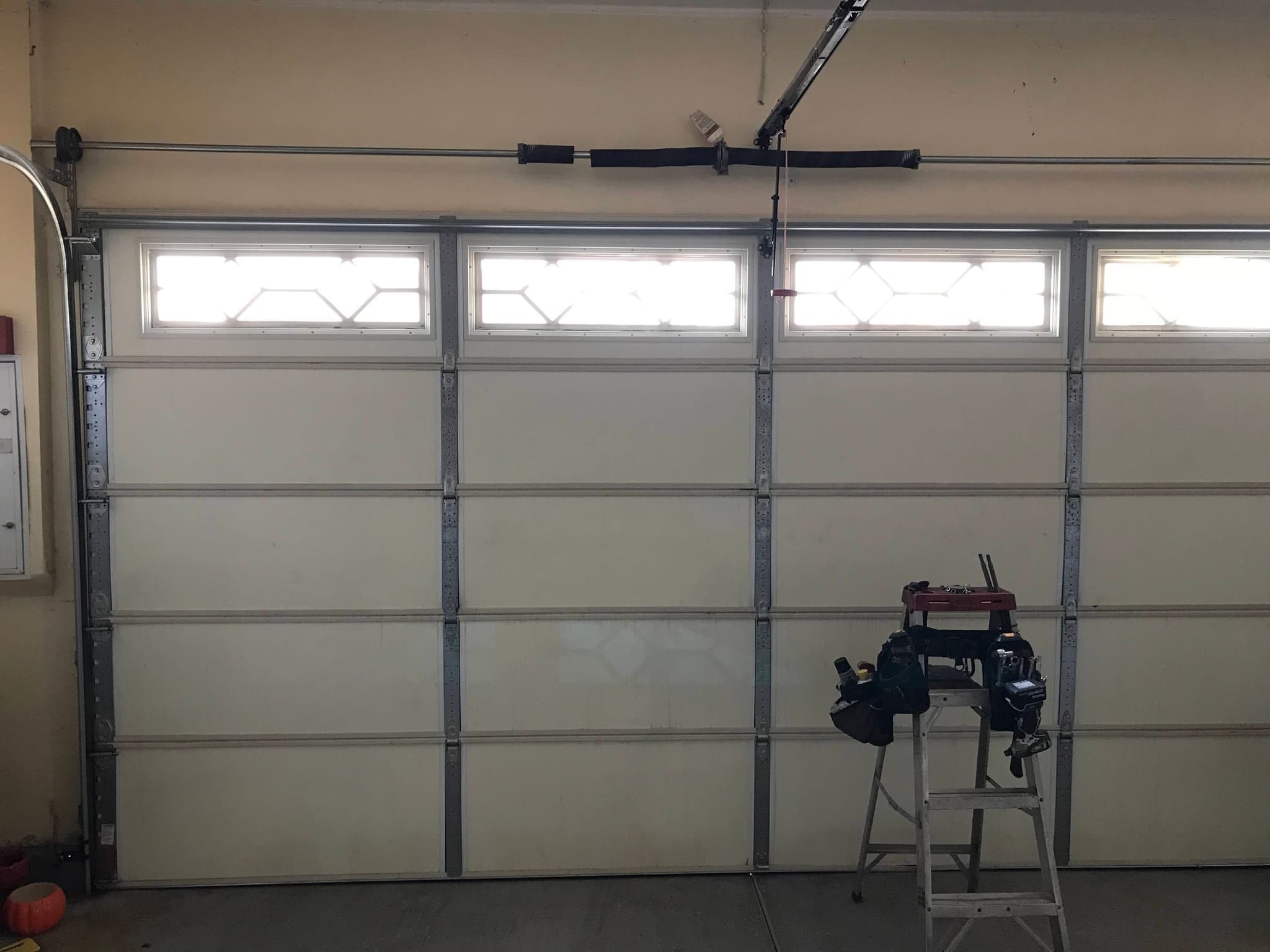
On a house this old, the door, springs, tracks and opener often date from different decades. Before we connect a new Clopay, Wayne Dalton or C.H.I. door to an existing opener, we check the opener for a battery backup. California Health and Safety Code section 19892(c) does not allow a replacement door to be connected to an opener without one. After we service or repair a LiftMaster, Genie or Chamberlain opener, we run the reverse test required by section 19890(e).