

Rollers, hinges and track
Roller, hinge and track repair in Orange County
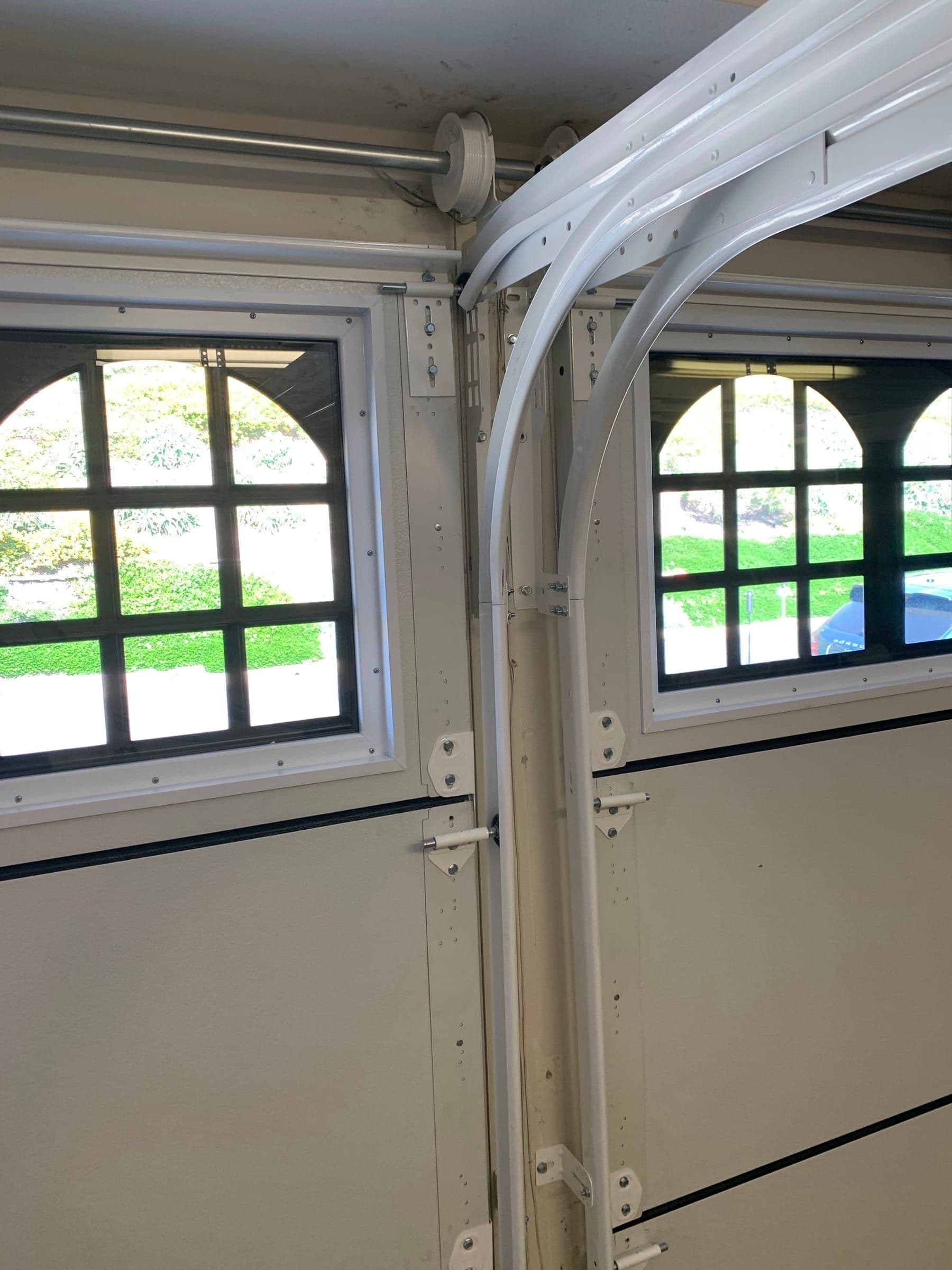
Rollers, hinges and track guide your door on every trip. When rollers wear, hinges crack or a track works loose, the door gets louder, wobbles and makes the opener work harder. We replace worn parts, realign the track and give you a written price before work starts.
Open 24/7 · a person answers
Same-day on most repairs booked by 11 am.
Callback within 15 minutes
Day or night, every day.
Written price first
Nothing starts until you approve it.
CSLB Lic. #859029
C-61 / D-28 · Verify on the CSLB website (opens in a new tab)
The short answer
The short answer
Worn rollers, cracked hinges and loose or bent track make a door shake, grind, catch at the same spot or drift out of line. DoorsEZ replaces rollers with nylon or steel to suit your door, swaps hinges by position, straightens or replaces track, and gives you a written price before any work begins.
Signs you need this
- The door shakes or wobbles in the track as it moves
- Grinding or rattling that follows the door up and down
- Rollers with chipped, flat-spotted or cracked wheels, or bent stems
- Hinges cracked across the leaf or pulling away around their screws
- Track loose from the wall or ceiling, or a dent the rollers bump over
- The door catches, jumps or slows at the same point on every trip
What you get
What the work includes
- Inspection of every roller, hinge, track section, bracket and hanger
- Roller replacement in nylon or steel, sized to your track, with a price for each option where both fit
- Hinge replacement matched to each hinge's position on the door
- Straightening, re-fastening or replacing bent or loose track sections
- Track alignment checked so both rails run parallel
- Lubrication of hinges and roller bearings, then a balance check
- Reverse test when an opener is connected (California Health and Safety Code section 19890)
How it works
From your call to a working door
Book or call
Book online or call (833) 366-7739. We call back within 15 minutes, day or night, and a dispatcher confirms a time window. Tell us where the door catches or where the noise starts.
Run and inspect
The technician runs the door by hand and with the opener, then checks each roller, hinge and track fastener to find which parts are worn and why.
Written price by option
You get a written price, including a choice of nylon or steel rollers where both suit your door. Nothing starts until you approve it.
Replace, align and test
We replace the approved parts, align and fasten the track, lubricate the moving parts, check the balance and run the reverse test if an opener is connected.
Details
Nylon or steel rollers: what changes
Residential rollers come in two common types. Steel rollers have a steel wheel, usually around open ball bearings that need periodic lubrication. They are strong, but they are louder in the track and can rust. Nylon rollers have a nylon wheel, often around a sealed ball bearing. They run quieter and smoother, which matters most when the garage sits under or beside a bedroom.
Neither is right for every door. A heavy or oversized door, or one that runs many times a day, may call for a roller built for that load, and the technician checks what your door's hardware was designed for before recommending one. Roller stems also come in different lengths, because the rollers at the top and bottom of the door sit in different fixtures from the ones in the hinges.
Wear shows as flat spots, chipped or cracked wheels, wobbling stems and bearings that grind or seize, so the roller slides along the track instead of rolling. Where both nylon and steel would suit your door, we write a price for each, explain the difference, and you choose.
Hinges: one size for each position
Hinges join the sections and let the door bend as it follows the curve from vertical to horizontal track. They are not all the same. Each row of hinges holds its rollers at a slightly different distance from the track, so most doors use graduated hinges, usually stamped with a number, one size per row. A hinge from the wrong row puts its rollers too close to or too far from the track, and the door binds.
Hinges wear in two ways. The metal cracks, often across the leaf or at the knuckle, after years of flexing. Or the screws work loose and the hinge pulls at the door skin, sometimes tearing the steel around the screw holes. A cracked hinge lets the sections shift against each other, which tends to show up as the door catching or jumping at the same spot on every trip.
We replace hinges by their position and number, use fasteners suited to your door, and point out any door skin that has torn around the screws, because that section may need repair too. If a section is damaged, our panel replacement page explains the options.
Track: bent, loose or out of line
Each side of the door runs in a track with a vertical piece fastened to the wall beside the opening, a horizontal piece hung from the ceiling, and a curved piece joining them. Jamb brackets hold the vertical track to the wall; rear hangers hold the back end of the horizontal track. If those fasteners loosen, the rails drift apart or out of line, the rollers ride unevenly, and the door can bind or eventually leave the track.
Bends usually come from impact: a car bumper, a bike stored against the rail, or the door forced closed while something was in its way. A shallow dent can sometimes be straightened and the track re-fastened. A kinked or twisted section is replaced, because a roller will catch on it every trip and the opener will strain against it.
Here is a common pattern. In a two-car household, in Garden Grove or any other city, the door may run many times a day, and years of vibration can loosen the rear hangers until the horizontal track sags and the rollers grind near the top of the travel. Re-fastening the hangers and replacing the worn rollers fixes the cause, not only the noise.
If rollers are already out of the track, or the door hangs crooked, see our off-track repair page.
Price
What affects the cost
The written price depends on how many rollers and hinges are worn, whether you choose nylon or steel rollers, how many track sections are bent or loose, your door's size and weight, and whether the problem has already affected the cables, springs or opener. The technician explains each item and writes the full price down, including every mandatory fee. Nothing starts until you approve it.
Are nylon rollers better than steel?
Nylon rollers are quieter and smoother, and sealed-bearing nylon rollers need less upkeep. Steel rollers are a sound choice on many doors too. Which suits yours depends on its weight, how often it runs and its hardware, so we write a price for each option that fits and you choose.
Can I replace my own rollers?
We advise against it. The rollers on the bottom section sit in the bottom brackets, which hold the lift cables under spring tension, and the others sit in hinges that carry the weight of the sections. Leave roller work to a technician.
My door catches at the same spot every time. What is it?
Usually a worn roller, a cracked hinge or a dent in the track at that height. Note where it happens and tell the dispatcher; the technician checks the parts at that point first.
Should I grease the track?
No. With the door closed and the opener unplugged, wipe the tracks clean instead. Grease in the track collects grit and makes rollers slide rather than roll. Lubricate the hinge knuckles and the bearings of steel rollers with a garage-door lubricant, following its label, and leave the bottom brackets and cables alone.
Do worn rollers affect the opener?
Yes. Rollers that drag make the door harder to move, and the opener works harder on every trip. After replacing them, we reset the opener's force and travel to suit the door and run the reverse test.
Related
You might also need
- Noisy doorEvery garage door noise points to a part. A squeak is usually dry metal, a grind is usually a worn roller or opener gear, and a single bang can be a spring breaking. We find the source and fix it once you approve a written price.
- Off track and cablesA door that has jumped its track or hangs crooked on a frayed cable is carrying its weight unevenly. We secure the door, reset it, replace cables and drums, repair or replace bent track, and give you a written price before work starts.
- Panels and hardwareA dented panel, a cracked hinge or a worn bottom seal does not always mean a new door. We replace single sections when a matching one is still made, swap worn rollers and hinges, fit new bottom seals, and give you a written price before work starts.
Open 24/7 · a person answers
Talk to a person today
Book online or call (833) 366-7739. We call back within 15 minutes, day or night.