

Noise repair
Quiet a noisy garage door in Orange County
Every garage door noise points to a part. A squeak is usually dry metal, a grind is usually a worn roller or opener gear, and a single bang can be a spring breaking. We find the source and fix it once you approve a written price.
Open 24/7 · a person answers
Same-day on most repairs booked by 11 am.
Callback within 15 minutes
Day or night, every day.
Written price first
Nothing starts until you approve it.
CSLB Lic. #859029
C-61 / D-28 · Verify on the CSLB website (opens in a new tab)
The short answer
The short answer
Garage door noise usually comes from dry hinges and rollers, worn roller bearings, loose hardware, a slack opener chain or worn opener gears. A single loud bang, followed by a door that will not lift, usually means a torsion spring broke. DoorsEZ finds the source, lubricates or replaces the worn part and checks the balance.
Signs you need this
- Squeaking or squealing at the hinges or rollers as the door moves
- Grinding or scraping from the track, or from the opener on the ceiling
- Rattling or vibration that has grown louder over the months
- A slapping chain or a jerky start from a chain-drive opener
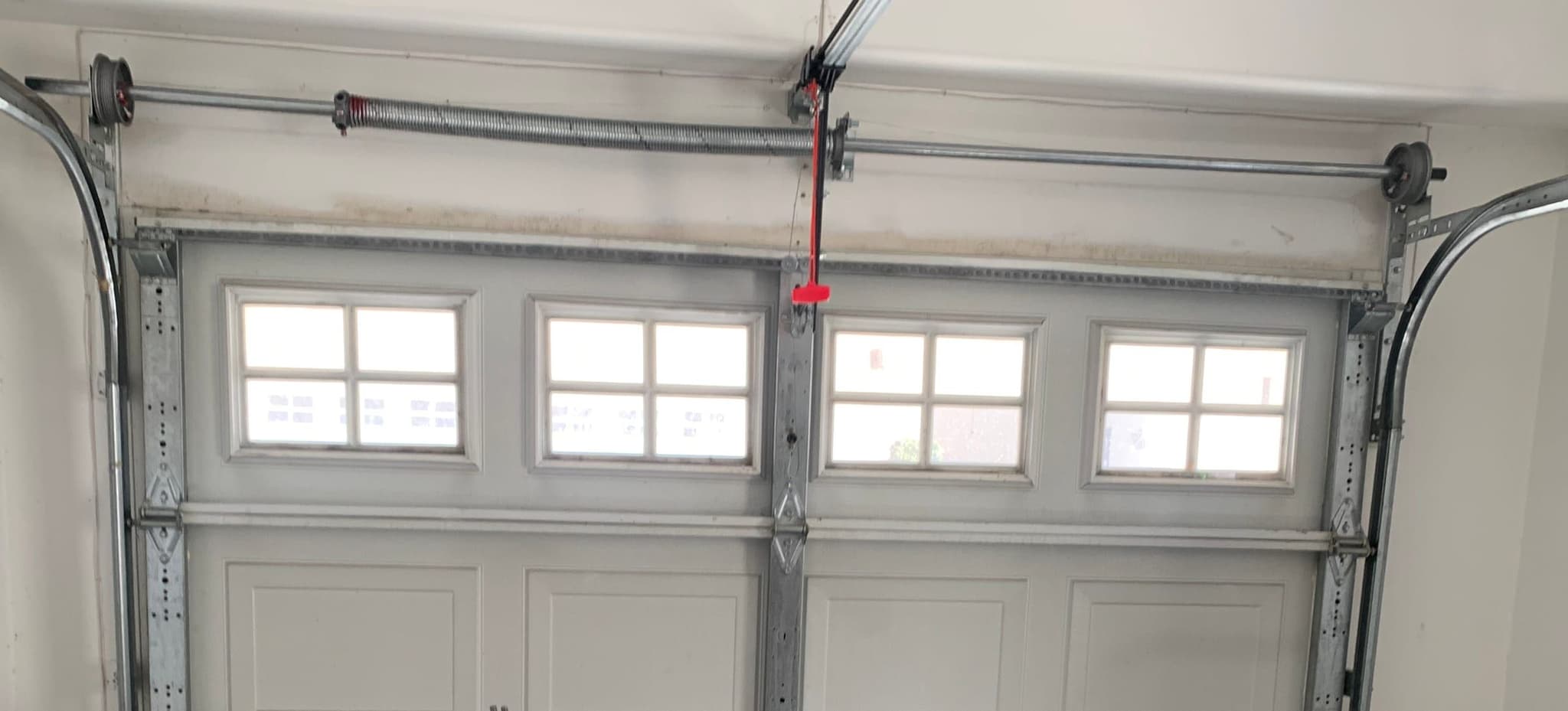
- Popping or creaking from the springs above the door
- One loud bang, after which the door feels heavy or will not lift
What you get
What the work includes
- Running the door through a full cycle, by hand and with the opener, to locate the noise
- Checking rollers, hinges, tracks, springs, cables and the opener drive
- Lubricating hinges, roller bearings and spring coils
- Tightening loose track and hinge fasteners
- Replacing worn rollers or hinges, with your approval
- Adjusting opener chain or belt tension and checking the drive gear
- Balance check, and after opener work, the reverse test required by HSC section 19890
How it works
From your call to a working door
Listen and locate
Book online or call (833) 366-7739 and tell us when the noise happens. The technician runs the door by hand and with the opener to find where the sound starts.
Explain and price
We show you the part making the noise, explain why, and write down the price. Nothing starts until you approve it.
Lubricate, tighten or replace
Dry parts get lubricated, loose hardware gets tightened, and worn rollers, hinges or opener parts get replaced.
Balance and test
We check the door's balance and, after any opener work, run the reverse test California requires (Health and Safety Code section 19890).
Details
What each noise usually means
Squeak or squeal: dry hinges, dry roller bearings or dry spring coils. It usually repeats at the same point in the door's travel, where one hinge flexes.
Grinding: worn roller bearings or a roller rubbing a bent track. If the grind comes from the ceiling, it is more likely a worn gear or sprocket inside the opener.
Rattling: loose track brackets, hinge screws or opener mounting hardware. It tends to grow slowly as vibration loosens more fasteners.
Slapping or a jerky start: a slack chain on a chain-drive opener, or a door that is out of balance, so the opener has to yank it into motion.
Popping or creaking from above the door: springs that are dry, rusty or near the end of their life. Book an inspection rather than waiting for the next sound.
One loud bang, then nothing moves: often a torsion spring breaking. If the door now feels heavy or the opener strains, stop using it.
Scraping along the sides: the door rubbing a track or the jamb, sometimes the first sign it is coming off track.
What you can safely do first
Close the door and unplug the opener before you touch anything.
- Lubricate. Use a garage-door lubricant on hinge knuckles and roller bearings. Leave the springs and their winding cones alone; they sit under stored tension, and we lubricate them during a visit.
- Clean the tracks. Wipe out dirt and old grease with a rag. Tracks should be clean, not greased.
- Snug loose bolts. Hinge screws and the brackets that hold the track to the wall can be tightened with a socket. Leave everything at the bottom corners of the door alone: the bottom brackets connect to the lift cables and carry spring tension.
- Listen again. Plug the opener back in and run the door through a full cycle.
If the noise is unchanged, or it is a grind, pop or bang, the part needs a technician. For example, if lubrication stops a squeak in a Brea garage but a grind remains near the top of the travel, that points to a worn roller or the opener, not a missing drop of oil. Book a visit or call (833) 366-7739.
Fixes we make
Rollers. Worn steel rollers without bearings are a frequent source of grinding and rattle. Sealed-bearing nylon rollers are a common upgrade for a quieter door. Rollers at the bottom corners sit next to the cable brackets, so we change them with the door secured.
Hinges. Cracked or worn hinges let sections rub; we replace them.
Track. We realign or replace bent sections and tighten the brackets.
Opener. We adjust chain or belt tension, check the drive gear and sprocket, and fasten the opener and its rail firmly to the ceiling. In a townhome where the garage sits under a bedroom, say in Irvine or Tustin, opener vibration travels through the ceiling, and vibration isolators at the mounts can help. If the opener is worn out, a belt-drive replacement is generally quieter than a chain drive, and any new residential opener we install has the battery backup HSC section 19892 requires.
Springs. Dry springs get lubricated. Rusted or tired springs get a written price for replacement, in matched pairs on two-spring doors.
Every fix ends with a balance check, and after opener work, the reverse test HSC section 19890 requires.
Price
What affects the cost
Lubrication and tightening use few or no parts. Replacing rollers, hinges, track or opener parts adds parts and time, and the number of rollers, the door's size and the opener model change the total. The price is written down and approved by you before work starts.
Is a noisy garage door dangerous?
Squeaks and rattles are wear, not danger. A loud bang, popping from the springs, a frayed cable or scraping at the sides can be warnings. If the door feels heavy or sits crooked, stop using the opener and call (833) 366-7739.
Which lubricant should I use?
One sold for garage doors, applied as its label says, to hinges and roller bearings. Keep it off the tracks, and leave the springs to us, because they hold stored tension.
Will new rollers make my door quieter?
When worn rollers are the cause, yes. We confirm the source first, so you are not paying for rollers when the noise is coming from the opener.
Why is my opener louder than the door?
Chain drives are louder than belt drives by design, and worn gears or loose mounting hardware add to it. We check the opener and give you a written price to repair or replace it.
Can I tighten the bolts myself?
Hinge screws and track brackets, yes, with the door closed and the opener unplugged. Leave the bottom brackets, cable drums and spring hardware to us, because they hold stored spring tension.
Related
You might also need
- Tune-up and inspectionA check of every moving part, from the springs and cables to the opener's reverse setting, so wear gets caught before it leaves your car stuck inside. Anything that needs fixing gets a written price before we touch it.
- Broken springWhen a spring breaks, the door becomes too heavy to lift and the opener strains or stops. We replace torsion and extension springs from our base in Fullerton across Orange County, and you approve a written price before any work starts.
- OpenersWe replace and install LiftMaster, Genie and Chamberlain openers, with the battery backup California law requires. You get a written price before we start and a reverse test before we leave.
Open 24/7 · a person answers
Talk to a person today
Book online or call (833) 366-7739. We call back within 15 minutes, day or night.