

Symptom: opener trouble
Garage door opener not working? Safe checks first
An opener that stops working usually tells you why by how it fails: silence, a hum, a motor that runs without the door, a remote that works only up close, or a blinking light. Match what you see, run the checks that are safe, and leave the springs and the opener's insides to us.
Open 24/7 · a person answers
Same-day on most repairs booked by 11 am.
Callback within 15 minutes
Day or night, every day.
Written price first
Nothing starts until you approve it.
CSLB Lic. #859029
C-61 / D-28 · Verify on the CSLB website (opens in a new tab)
The short answer
The short answer
If your opener is silent, check power, the breaker and any GFCI outlet. If only the remote fails, check its battery and the wall control's lock. If the motor runs but the door stays put, the opener is disconnected or a gear has stripped. If it hums and strains, suspect a broken spring and call DoorsEZ at (833) 366-7739.
What you might notice
- Nothing happens at all: no motor, no light
- The motor hums or clicks, but the door does not move
- The motor runs and the chain or belt moves, but the door stays put
- The wall button works, but the remote or keypad does not
- The remote works only from close to the garage
- The opener light or a status light blinks in a pattern
What you get
What the work includes
- A check of springs, cables and track first, because a heavy or binding door strains any opener
- Power, wiring, wall control and safety sensor check
- Diagnosis of the motor, drive gear, trolley, belt or chain, and logic board
- Remote and keypad programming for LiftMaster, Genie and Chamberlain openers
- Force and travel settings matched to the door
- A written price for the repair, or for a replacement opener with battery backup (HSC section 19892) when repair does not make sense
- Reverse test after every opener repair (HSC section 19890)
How it works
From your call to a working door
Match the symptom
Press the wall button once and note what the opener does: nothing, a hum, a motor running without the door, or a blinking light. Each points somewhere different, as this page explains.
Run the safe checks
Power, the wall control lock, remote and keypad batteries, the photo eyes and the release. None involves opening the opener or touching a spring.
Book or call
Book online or call (833) 366-7739. We call back within 15 minutes, day or night, and the dispatcher confirms a time window. Tell us the opener brand and what the lights do; a short video helps.
Diagnose, price, repair, test
The technician checks the door first, then the opener, and writes down the price. After you approve, we make the repair, set force and travel, and run the reverse test (HSC section 19890).
Details
What the opener is telling you
How the opener fails narrows the cause. Press the wall button once and watch.
- Nothing at all. No light and no sound. Check that the opener is plugged in, then the breaker and any GFCI outlet in the garage, which can trip and cut power to the ceiling outlet. If the opener has power and still does nothing from the wall button, the wall control, its wiring or the logic board may have failed.
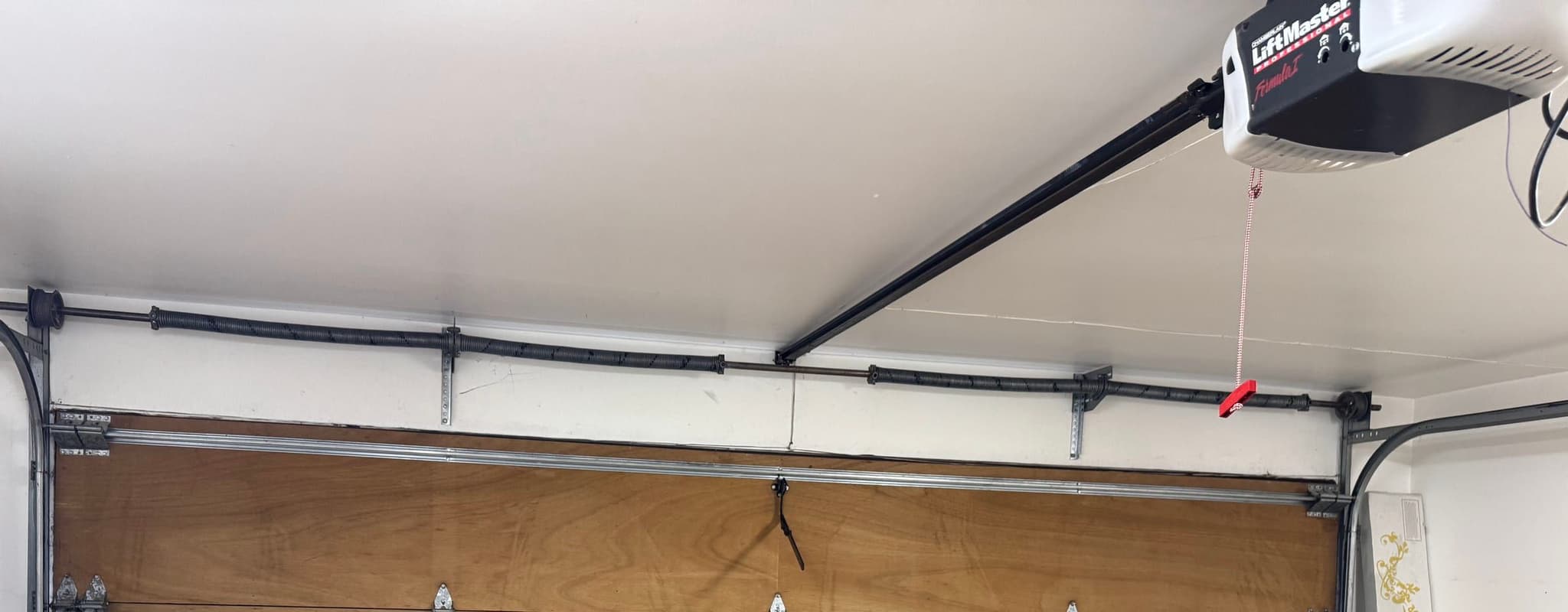
- A hum or click, no movement. The motor is trying and cannot move the door. A broken spring, an engaged manual lock or a door binding in its track are common causes; less often, a motor part has failed. Stop pressing the button.
- The motor runs, the door does not. If the chain or belt moves and the door stays put, the door has been disconnected from the opener, usually by the red release. If you hear the motor but the chain or belt does not move, a drive gear has likely worn out.
- The light blinks. Many openers flash the light or a status light in a pattern to report a fault, most often with the photo eyes. Your manual, or the maker's support site, lists what each pattern means.
If the door reverses on the way down rather than refusing to move, our page on doors that will not close covers that.
When only the remote or keypad fails
If the wall button runs the door but a remote or keypad does not, the opener is working and the problem is the signal.
Start with the remote battery. Then look at the wall control for a lock or vacation setting: on many models it turns off every remote and keypad while the wall button still works. If one remote fails and another works, the failing one may need a new battery or reprogramming; your manual describes how. A keypad that stops responding often needs only a new battery or its code entered again.
A remote that works only from close to the garage points to range. The opener's antenna wire should hang down freely, not be tucked against the metal rail. Some LED bulbs give off radio noise that can shorten remote range, and the trouble often starts right after a bulb change; opener makers sell bulbs built to limit it.
For example, say a Tustin homeowner replaces the bulbs in the opener with LEDs, and the next week the remotes work only from the end of the driveway. Putting the old bulbs back brings the range back, which shows the bulbs were the cause.
If reprogramming and new batteries do not help, we program remotes and keypads for LiftMaster, Genie and Chamberlain openers, and replace a failed receiver.
What is safe to check, and what to leave alone
Safe to check, with the door closed or fully stopped:
- Power: the plug, the breaker and any GFCI outlet.
- The wall control lock, and the remote and keypad batteries.
- The photo eyes: clear the beam, wipe both lenses and look for a steady indicator light on each.
- The release: if the door was disconnected, reconnect it with the door fully closed, the way your manual describes.
- The manual lock: an engaged slide bar or T-handle lock stops the opener.
Leave alone: springs, cables and the bottom brackets, which hold stored tension; the opener's cover, gears and wiring; and the force and travel settings. Turning force up to get a heavy door moving hides a spring or track problem and can stop the door from reversing when it should. Health and Safety Code section 19890(e) requires a technician who services or repairs an opener to test whether it reverses on a rigid two-inch obstacle, and we run that test after every opener job.
If the opener is old or has no battery backup, ask about replacement. Residential openers manufactured, sold or installed in California since July 1, 2019 must have battery backup (Health and Safety Code section 19892), and subdivision (c) bars connecting a replacement door to an existing opener without it.
Price
What affects the cost
The fix can be a reset outlet, a new remote battery or a reprogrammed keypad, or it can be a gear, a logic board or a new opener. The opener's age and model, whether parts are still made, and any door repair the opener needs also change the price. The technician writes the full price down, including every mandatory fee, and nothing starts until you approve it.
Why does my opener hum but the door does not move?
The motor is trying and cannot move the door. A broken spring is a common cause, as is an engaged manual lock or a door binding in its track; a failed motor part is another. Stop pressing the button, look at the springs from the floor and call (833) 366-7739 if one has a gap.
Why does the motor run but the door stays closed?
The door is probably disconnected from the opener, usually after someone pulled the red release. With the door fully closed, reconnect it the way your manual describes. If it still will not engage, a gear or trolley has likely worn out and needs a repair.
Why does the light on my opener keep blinking?
Many openers blink to report a fault, most often with the photo eyes. Clear the beam, wipe both lenses and check that each sensor light is steady. Your manual lists what each pattern means. If it keeps blinking, book an opener repair.
Should I repair the opener or replace it?
It depends on what failed, the opener's age, whether parts are still made and whether it has battery backup. The technician writes a price for the repair and, when it makes sense, for a replacement, and you choose.
Related
You might also need
- Opener repairWe repair and replace LiftMaster, Genie and Chamberlain openers, reprogram remotes and keypads, and run the reverse test after every opener job. You see a written price before any work starts.
- OpenersWe replace and install LiftMaster, Genie and Chamberlain openers, with the battery backup California law requires. You get a written price before we start and a reverse test before we leave.
- Won't openStart with the checks that are safe: power, the wall control's lock, remote batteries, whether the opener is disconnected and the manual lock. If those pass, the cause is likely a spring or cable, and that part is our job.
Open 24/7 · a person answers
Talk to a person today
Book online or call (833) 366-7739. We call back within 15 minutes, day or night.