

Maintenance
Garage door tune-up and safety check in Orange County
A check of every moving part, from the springs and cables to the opener's reverse setting, so wear gets caught before it leaves your car stuck inside. Anything that needs fixing gets a written price before we touch it.
Open 24/7 · a person answers
Same-day on most repairs booked by 11 am.
Callback within 15 minutes
Day or night, every day.
Written price first
Nothing starts until you approve it.
CSLB Lic. #859029
C-61 / D-28 · Verify on the CSLB website (opens in a new tab)
The short answer
The short answer
A DoorsEZ tune-up checks springs, cables, drums, rollers, hinges and tracks, tests the door's balance, lubricates the moving metal parts and adjusts the opener. We then run the reverse test (HSC section 19890) and check the battery backup (HSC section 19892). Anything that needs repair gets a written price first.
Signs you need this
- The door is louder than it used to be, or squeaks at the same spot every time
- One side rises ahead of the other, or the door looks uneven as it moves
- The opener strains, hesitates or reverses for no clear reason
- Rollers wobble in the track or have chipped wheels
- You do not know when the reverse test was last run
- You are selling, buying or renting out a home and want to know where the door stands
What you get
What the work includes
- Visual check of torsion or extension springs, cables, drums and bottom brackets
- Balance test with the opener disconnected
- Rollers, hinges and tracks checked for wear, alignment and loose fasteners
- Lubrication of hinges, roller bearings and spring coils with a garage-door lubricant
- Opener check: travel limits, close force, photo eyes, wall control and remotes
- Reverse test on a rigid two-inch obstacle (HSC section 19890) and battery backup check (HSC section 19892)
- A walk-through of what we found, with a written price for any repair
How it works
From your call to a working door
Book a window
Book online or call (833) 366-7739. The dispatcher confirms a time window. Tell us about any noise or habit the door has picked up.
Inspect and balance
The technician runs the door with the opener and by hand, disconnects the opener to test balance, and checks springs, cables, rollers, hinges and tracks.
Lubricate and adjust
We lubricate the parts that pivot or spin, tighten loose track and hinge fasteners, and set the opener's limits and force to the door.
Test and explain
We run the reverse test and check the photo eyes and battery backup, then explain what we found. Any repair gets a written price, and nothing starts until you approve it.
Details
What we check, part by part
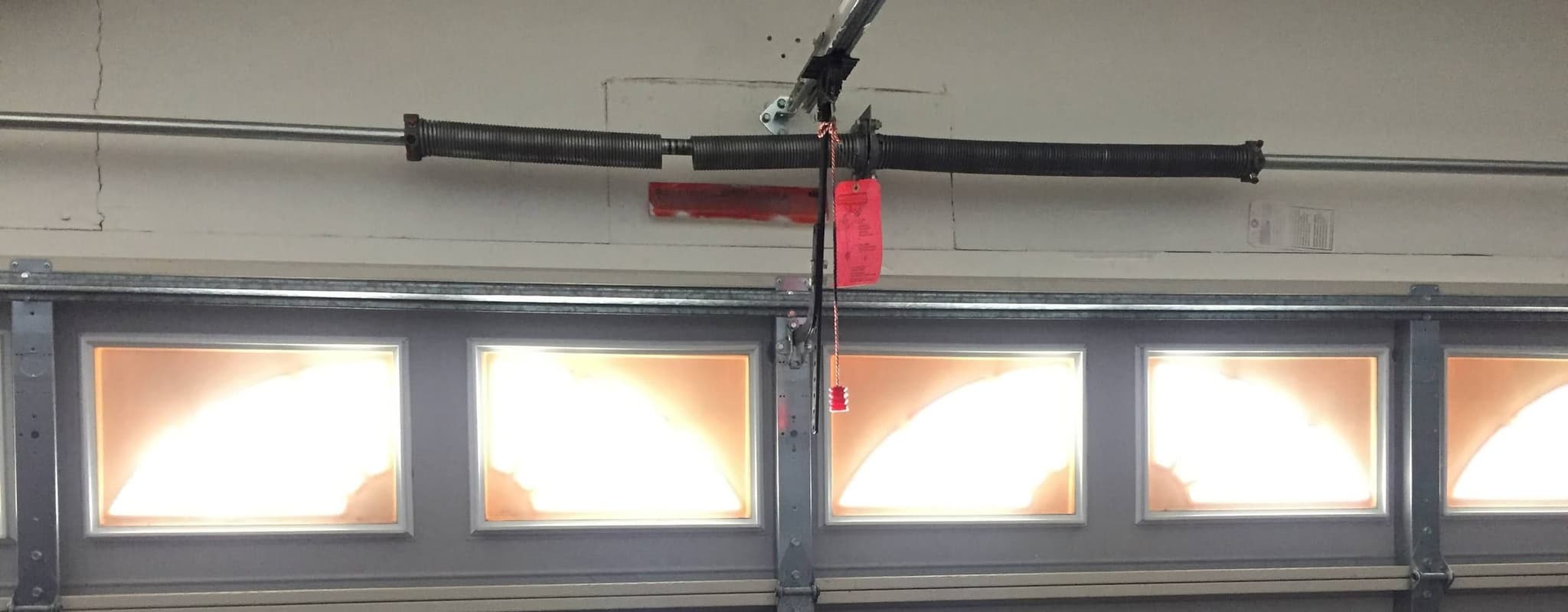
Springs. We look for gaps, rust, stretched coils and uneven wear, and note whether a two-spring door still has a matched pair. We do not change spring tension during a tune-up unless the balance test calls for it and you approve the price.
Cables, drums and bottom brackets. Fraying, kinks or a cable riding off its drum are early signs of a door that may come off track.
Rollers and hinges. Chipped wheels, wobbling stems and cracked hinges get noted; the sound ones get lubricated.
Tracks. We check alignment, dents and the fasteners holding the track to the wall and ceiling.
Opener. We check the drive (chain, belt or screw), the travel limits and close force, the photo eyes, the wall control, your remotes and the battery backup. We service LiftMaster, Genie and Chamberlain openers.
Weather seal. A torn bottom seal lets in water, dust and pests; we note it and price a replacement if you want one.
Before we leave, we walk you through what we found, and anything that needs repair gets a written price.
Balance: the test most homeowners skip
A garage door should feel close to weightless. The springs carry the weight; the opener only guides the door up and down. When springs weaken with age, the opener starts doing their work. It still runs, so the problem hides, but the opener's gear and motor wear faster and the door can start to stall or reverse.
To test balance, the technician closes the door, disconnects the opener and lifts the door by hand to about halfway. A balanced door stays roughly where it is left. One that drifts down has weak springs; one that drifts up has too much tension.
Correcting balance means changing spring tension, and that is technician work. Torsion springs are wound with steel bars and store enough energy to injure someone if a bar slips. If the test shows a problem, we explain it and give you a written price before anyone touches the springs.
The reverse test and battery backup
California sets two opener rules that a tune-up checks.
The reverse test. Health and Safety Code section 19890, subdivision (e), requires a technician who services or repairs an opener to test whether it reverses on contact with a rigid two-inch obstacle. If it does not, the technician must attach a warning certificate stating that it failed. We run the test on every tune-up, and we also check that the door reverses when something breaks the photo-eye beam.
Battery backup. Section 19892 requires battery backup on residential openers sold or installed in California since July 1, 2019. Subdivision (c) also bars connecting a replacement door to an existing opener that lacks one. If you are planning a new door, a tune-up tells you in advance whether the opener can stay.
For example, a Fullerton homeowner getting ready to sell can book a tune-up before the buyer's inspection. The Transfer Disclosure Statement form set out in Civil Code section 1102.6 lists automatic garage door openers, with a footnote that an opener may not meet the automatic-reversing standards beginning at Health and Safety Code section 19890. Knowing the result of a recent reverse test is useful when filling it out.
Lubrication, done right
More lubricant is not better. We use a garage-door lubricant on the parts that pivot or spin: hinge knuckles, roller bearings and a light coat along the spring coils. We keep it off the tracks, because grease there collects grit and makes rollers slide instead of roll, and off the opener belt.
Where you live changes what we look for. Near the coast in Huntington Beach and Fountain Valley, salt air shows up as rust on springs, hinges and fasteners. Inland in Ontario, Chino Hills and Rancho Cucamonga, dust settles in roller bearings and tracks. Both tend to make a door louder before they make it fail, which is why a door that has started to squeak is a good reason to book a tune-up.
Between visits, you can wipe the photo-eye lenses, keep the tracks clear of debris, lubricate hinges and roller bearings, and run the reverse test as your opener manual describes. Leave the springs to us; they sit under stored tension.
Price
What affects the cost
The tune-up price depends on the number of doors, the door type and the opener. If the inspection turns up worn parts, replacing them is priced separately. Both are written down and approved by you before work starts.
How often should a garage door be tuned up?
We suggest once a year for a household door. A door that is your main way in and out, or one that serves several units, may need more. Your opener manual also lists checks the manufacturer wants you to do yourself.
Can I do the reverse test myself?
Yes. Your opener manual describes it, usually with a piece of wood laid flat on the floor under the door. If the door does not reverse when it touches the wood, stop using the opener and book a visit.
What lubricant should I use?
A product sold for garage doors, used as its label says. Put it on hinges and roller bearings, and keep it off the tracks and the opener belt. We lubricate the springs during a visit, because they sit under stored tension.
Will you replace parts during the tune-up?
Only with your approval. If we find a worn part, the technician explains it and writes down the price. Nothing is replaced until you say yes.
Do you inspect doors for landlords, HOAs and property managers?
Yes. For rentals, associations and multiple doors, see our For Business page, where you can tell us how many doors you need checked.
Related
You might also need
- Noisy doorEvery garage door noise points to a part. A squeak is usually dry metal, a grind is usually a worn roller or opener gear, and a single bang can be a spring breaking. We find the source and fix it once you approve a written price.
- Broken springWhen a spring breaks, the door becomes too heavy to lift and the opener strains or stops. We replace torsion and extension springs from our base in Fullerton across Orange County, and you approve a written price before any work starts.
- OpenersWe replace and install LiftMaster, Genie and Chamberlain openers, with the battery backup California law requires. You get a written price before we start and a reverse test before we leave.
Open 24/7 · a person answers
Talk to a person today
Book online or call (833) 366-7739. We call back within 15 minutes, day or night.