

Riverside County
Garage door repair in Corona
About two-thirds of Corona's homes were built between 1980 and 2009, many of them in planned neighborhoods such as Eagle Glen, and the city's own design guidelines ask for garage doors that look set into the wall and match the house. This page explains what that, the older homes around the Grand Boulevard Circle and the city's fire hazard zones mean for a garage door repair or a new door, and how DoorsEZ, a brand of A Quality Garage Door Company (CSLB Lic. #859029), reaches Corona from our Fullerton base.
Where we work in Corona
- Neighborhoods
- Grand Boulevard Circle (downtown) · Eagle Glen
Riverside County, from our Fullerton base
Open 24/7 · a person answers
Same-day on most repairs booked by 11 am.
Callback within 15 minutes
Day or night, every day.
Written price first
Nothing starts until you approve it.
CSLB Lic. #859029
C-61 / D-28 · Verify on the CSLB website (opens in a new tab)
Garage doors in Corona
Corona homes: mostly built from 1980 to 2009, through the city's specific plans
The Census Bureau's American Community Survey (2020-2024 5-year estimates, table B25034) counts 50,799 housing units in Corona. The 1990s were the largest building decade, with 26.4 percent of today's homes, followed by the 1980s at 23.9 percent and the 2000s at 18.0 percent. Together those three decades account for 68.3 percent of the city's housing. About 24.6 percent was built before 1980, and about 7 percent in 2010 or later.
Much of that growth came through specific plans, the master plans the city adopts for individual neighborhoods. Eagle Glen is one example. The City Council approved its plan on October 2, 1991, under the name Mission Crest. A 1997 amendment renamed it Eagle Glen and allowed 1,086 detached single-family homes on lots of at least 7,200 or 9,600 square feet, around an 18-hole golf course (Eagle Glen Specific Plan SP-90-6). The city publishes the full list of specific plans on its Planning Division site.
A house built between 1980 and 2009 is now roughly 17 to 46 years old. Its door, springs and opener may be the originals, or they may have been replaced once or more, and we don't assume either. If you want a new door but plan to keep an opener installed before July 1, 2019, mention it when you book: Health and Safety Code section 19892(c) does not allow a replacement door to be connected to a residential opener without battery backup, whatever its age. We install Clopay, Wayne Dalton and C.H.I. doors, and we service LiftMaster, Genie and Chamberlain openers.
In the same survey, 65.6 percent of Corona's units are detached houses, 6.0 percent are attached homes such as townhomes, 20.6 percent are in buildings of five or more units, and 2.8 percent are mobile homes (table B25024). Owners live in 63.8 percent of occupied homes, 31,431 of 49,247 (table B25003). In the rest, a landlord or property manager may need to approve the work.
Inland heat, canyon edges and Corona's fire hazard zones
Summers in Corona are hot and dry, and the city's 2021 Community Wildfire Protection Plan names July as the peak month for fires near the city. A closed garage holds that summer heat through the afternoon, with the opener inside it. Most wear on a door here comes from use: every open-and-close is one cycle, and a spring is made to last a set number of cycles. A door that has gone out of balance makes the opener work harder than it was built to, so the technician tests the balance before judging the opener. Dust collects in the tracks and on the two safety sensors near the floor. If the door stops and reverses for no clear reason, wiping the sensor lenses with a soft cloth is a safe check for an owner.
Fire is the bigger local factor. The Corona Fire Department says about 3,000 structures in the city are in a Very High Fire Hazard Severity Zone and just over 14,000 are within half a mile of one. Its wildland-urban interface page cites Ordinance No. 3034, adopted in 2010, and says new construction in the wildland-urban interface must meet Chapter 7A of the California Building Code. The fire department also publishes an address lookup map that shows which fire hazard zone a home is in. Before you order a replacement door for a home in a mapped zone, ask the Corona Building Division whether those standards apply to it.
The same wildfire plan says fires near Corona cluster on its western side, in Fresno Canyon and Mabey Canyon, with fewer in Joseph Canyon and the Temescal Valley. It lists the 2008 Freeway Complex fire at 30,305 acres and the 2020 Blue Ridge fire at 13,694 acres. The plan advises hardening homes against embers, "including maintaining vent coverings and other openings." A garage door is a large opening, and a cracked bottom seal or worn side seals can leave gaps. If you can see daylight around your closed door, point it out on the visit.
If the power goes out during an evacuation, an opener without battery backup will not lift the door. Battery backup has been required on residential openers sold or installed in California since July 1, 2019 (Health and Safety Code section 19892). Learn where the red emergency release is while things are calm, and pull it only with the door fully closed. If a spring breaks or a cable comes off, leave the door where it is, stop using the opener and call (833) 366-7739. Springs, cables and bottom brackets hold the door's full weight under high tension. Leave them to a technician.
The city's garage door rules, Grand Boulevard homes and HOAs
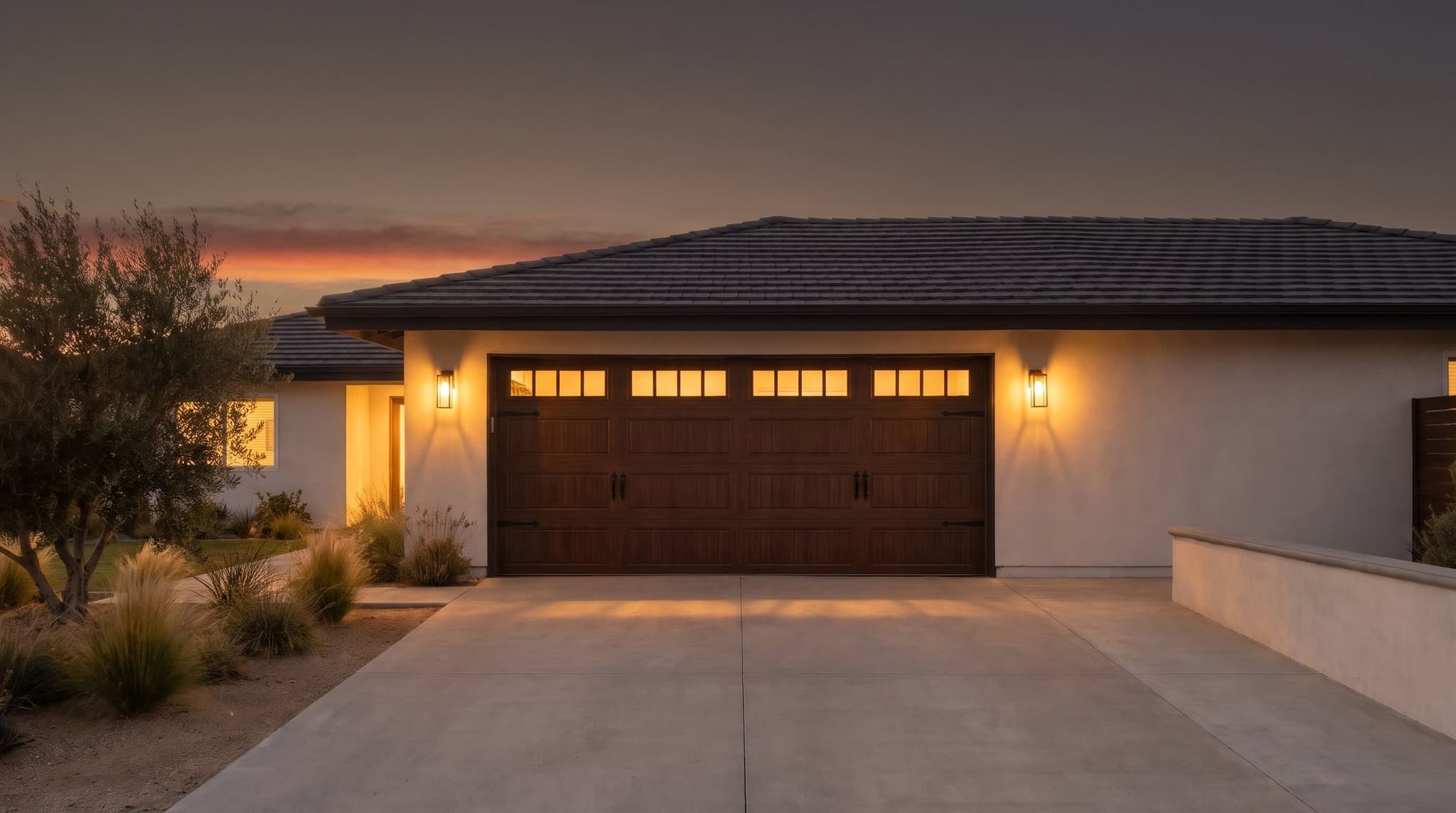
Corona's Residential Development Design Guidelines (adopted August 1999, revised March 2009) have a section on garage doors, section 4.2.K. It says garage doors "shall appear to be set into a wall rather than flush," that their design should be "simple, clean and unadorned," and that "metal roll-up garage doors that match the color and design of the individual home are required." It also asks that at least one in four doors in a development have windows or similar design features. The guidelines are written for new projects, custom homes and additions to historic homes. If you are building, adding on or changing the size of the opening, ask the city's Planning Division which rules apply before you choose a door.
Section 4.5 of the same guidelines says Corona's historic homes are "primarily located within the Grand Boulevard Circle," and that changes to them should keep the home's original style, "including detailing such as doors, windows." The city also publishes separate Design Guidelines for Historic Buildings (2018). If your home is a historic property on or near the circle, ask the Planning Division before you change the style of the garage door. Our doors come in carriage-house, raised-panel and modern styles, with window options.
Neighborhoods built under a specific plan can carry their own rules. The city notes that its specific plans contain their own procedures and requirements, and the Eagle Glen plan includes design guidelines with sections on colors and on windows and doors. If you also live in an association, read your CC&Rs for door style, color and window rules before you order. Where the governing documents require approval for a change, Civil Code section 4765 requires the association's decision to be in writing.
About 36 percent of occupied Corona homes are rented (Census table B25003). If you rent, tell us who approves the work. When you book, give us any gate code or guest-entry instructions and tell us where the technician can park with a ladder and parts.
Reaching Corona from our Fullerton base
We work from Fullerton, in north Orange County. Corona is east of us, across the county line in Riverside County, and freeway traffic between the two decides how long the drive takes. So we don't give an arrival time until the dispatcher has confirmed your window. Book online or call (833) 366-7739, and we call back within 15 minutes, day or night. If you book by 11 am, ask the dispatcher whether a same-day visit is open in Corona that day.
On the visit the technician inspects the door and opener, explains what is wrong and gives you a written price, and nothing starts until you approve it. After any opener work, Health and Safety Code section 19890(e) requires the technician to test whether the door reverses when it meets a two-inch-high rigid object, and to label an opener that fails. Section 19890(h) does not allow a replacement door to be connected to an opener that fails that test, so a failing opener has to be repaired or replaced before a new door goes on it.
Commercial properties in Corona can book garage door repairs and service with us too. If you manage a commercial or industrial building with roll-up or dock doors, call (833) 366-7739 to ask first whether we can take the job.
Corona
What we fix in Corona
- Broken springWhen a spring breaks, the door becomes too heavy to lift and the opener strains or stops. We replace torsion and extension springs from our base in Fullerton across Orange County, and you approve a written price before any work starts.
- Opener repairWe repair and replace LiftMaster, Genie and Chamberlain openers, reprogram remotes and keypads, and run the reverse test after every opener job. You see a written price before any work starts.
- Off track and cablesA door that has jumped its track or hangs crooked on a frayed cable is carrying its weight unevenly. We secure the door, reset it, replace cables and drums, repair or replace bent track, and give you a written price before work starts.
- Panels and hardwareA dented panel, a cracked hinge or a worn bottom seal does not always mean a new door. We replace single sections when a matching one is still made, swap worn rollers and hinges, fit new bottom seals, and give you a written price before work starts.
- Emergency helpA door stuck open, a car trapped inside, or a door hanging out of its track. Here is what to do safely right now, and how to reach DoorsEZ at (833) 366-7739.
- Tune-up and inspectionA check of every moving part, from the springs and cables to the opener's reverse setting, so wear gets caught before it leaves your car stuck inside. Anything that needs fixing gets a written price before we touch it.
How it works
Three steps, no surprises.
Book a window or call
Pick a four-hour window online or call (833) 366-7739. A photo of the door helps us bring the right parts.
We call back within 15 minutes
Day or night, a dispatcher confirms your window and tells you who is coming.
Price agreed, door fixed
The technician shows you what failed and gives you a written price. Nothing starts until you approve it.
What we check before we leave
Every visit
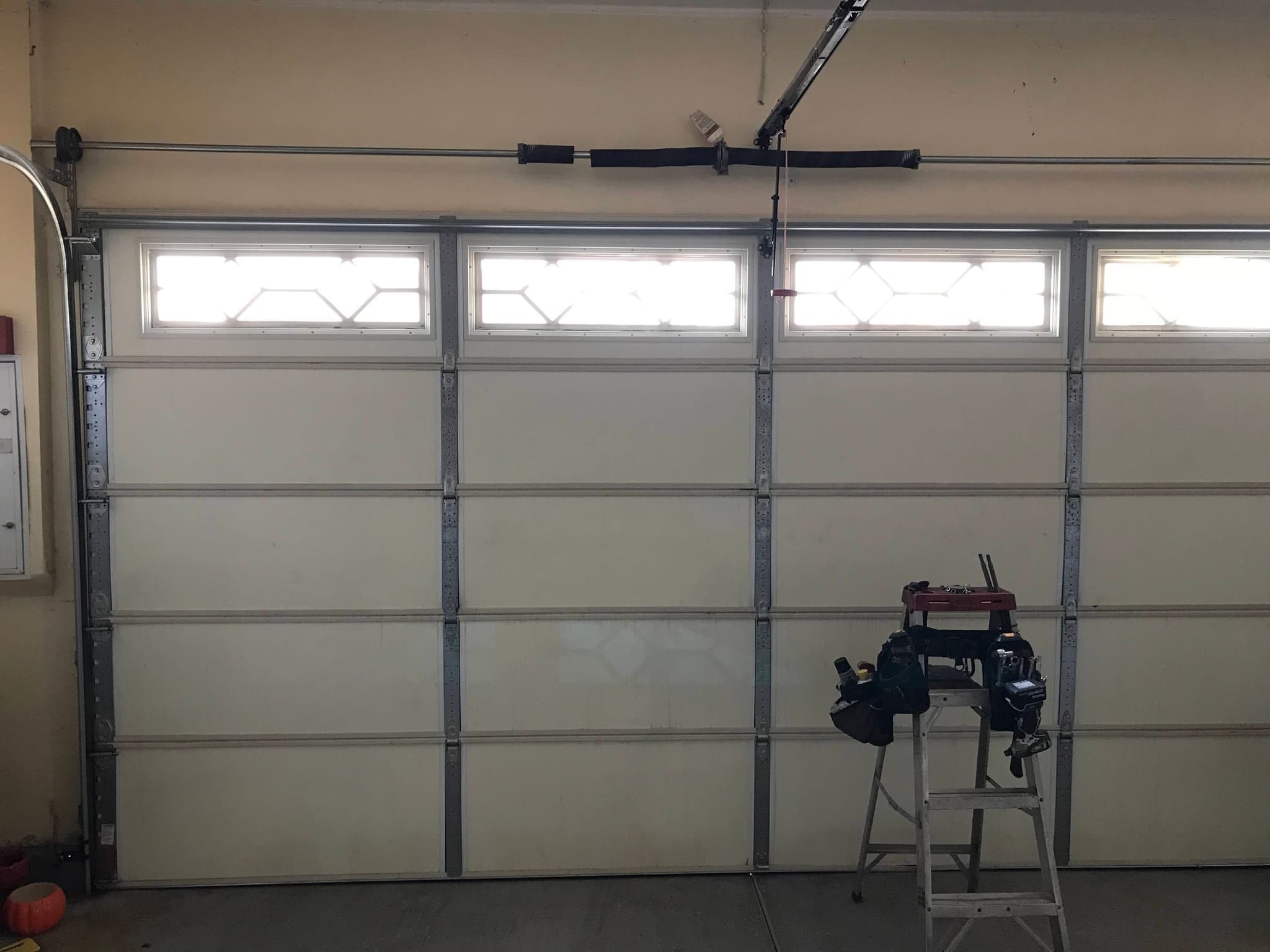
- Reverse test on a 2-inch obstacle, as Health and Safety Code section 19890 requires after opener work
- Photo-eye alignment and wiring
- Spring condition and door balance
- Cables, drums, rollers and hinges
- Battery backup on the opener
- Emergency release handle
Do I need a permit to replace a garage door in Corona?
Ask the city first. The city's published fee schedule (Table B, effective October 4, 2026) has no garage door line, so ask the Corona Building Division whether your job needs a permit before you order a door.
Does Corona have rules about how a garage door looks?
For new projects, custom homes and additions to historic homes, yes. The city's Residential Development Design Guidelines (section 4.2.K) say garage doors should look set into the wall rather than flush, keep a simple design and match the color and design of the house. Specific plans such as Eagle Glen's and HOA CC&Rs can add their own rules. If you are changing the size of the opening, ask the Planning Division first.
My home is in a fire hazard severity zone. Does that change which door I can install?
It may. The city's wildland-urban interface page says new construction there must meet the wildfire standards in Chapter 7A of the California Building Code, and the fire department's address lookup map shows which fire hazard zone your home is in. Whether those standards reach a replacement door is a question for the Corona Building Division, so check with them before you order a door.
I live in an older home near the Grand Boulevard Circle. Can I choose any garage door?
Not always. The city's design guidelines say historic homes are primarily within the Grand Boulevard Circle and that changes should keep the original style, including doors and windows. The city also has separate Design Guidelines for Historic Buildings. Ask the Planning Division before you change the door's style.
Is there a trip charge for a Corona visit?
We haven't published visit or repair prices yet, so ask when you call (833) 366-7739. On site, the technician gives you a written price, and nothing starts until you approve it.
Open 24/7 · a person answers
Door trouble in Corona?
Book online or call and talk to a person. We call back within 15 minutes, day or night.